Zambian Copper: Sourcing from the Copperbelt
Zambia is Africa's second largest copper producer, and the Copperbelt's cathodes move to world markets along corridors every buyer should understand.
Copper is the metal of electrification, and Africa's supply story runs through one region: the Central African Copperbelt, shared between Zambia and the DRC. On the Zambian side, a century of mining history has built deep technical capability, established smelting and refining, and, critically for buyers, a legal export framework that is well understood.
What Zambia sells
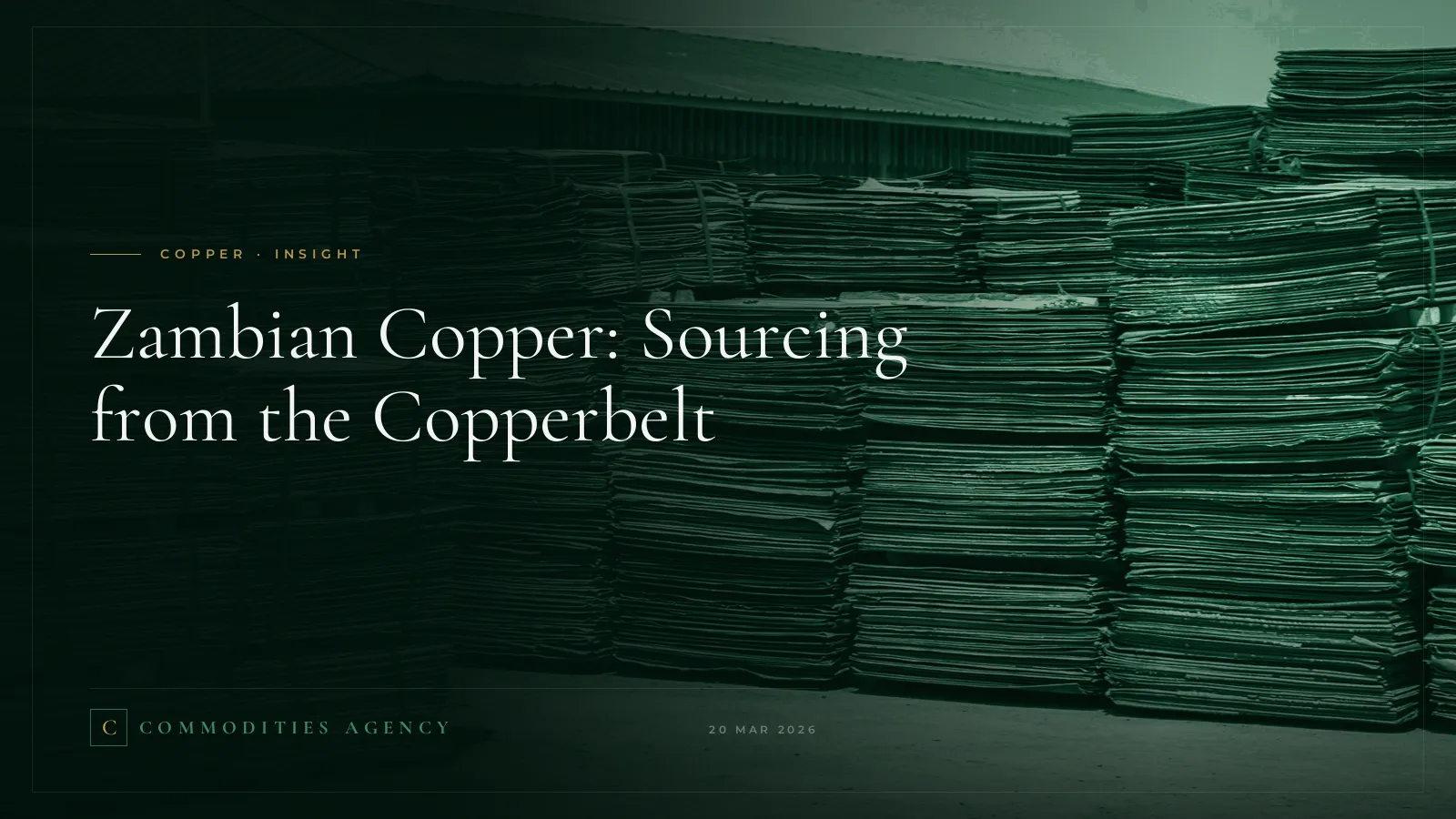
Zambian export copper comes principally as electrolytic cathodes (99.99% Cu, LME Grade A equivalent) and blister copper (~98–99%) destined for further refining. Cathodes are the standard commercial product: uniform 914mm plates, bundled, with assay certificates tracing back to the producing refinery.
The corridors
Zambia is landlocked, and copper's value density makes trucking economics workable across long distances. The main routes are Dar es Salaam in Tanzania (the traditional northern outlet), Durban via Zimbabwe or Botswana (slower, but preferred for some destinations and financing structures), and increasingly Walvis Bay in Namibia. Corridor selection affects transit time, insurance and, in volatile fuel markets, landed cost, so serious offers specify routing.
Due diligence essentials
Copper attracts more fraudulent paper than almost any other commodity. Genuine Zambian parcels have verifiable refinery provenance, warehouse receipts that can be independently confirmed, and sellers willing to accept inspection at the point of custody transfer. Any offer that resists SGS or Bureau Veritas inspection before payment is not an offer, it is bait.
Selling Zambian copper: what a buyer will check
For a seller, the due diligence described above is not an obstacle, it is the sale. Buyers in this market have been burned often enough that the seller who can prove the material exists, quickly, wins the trade. That means refinery or smelter documentation tying the cathode or blister to its producer, a warehouse receipt the buyer's inspector can confirm directly with the warehouse, and willingness to allow sampling and weighing at the point where custody changes.
It also means being realistic about the first transaction. Most serious buyers open with a trial parcel, commonly around 500 MT, delivered into a recognised bonded facility or a port and settled against a confirmed letter of credit rather than any form of prepayment. Sellers who insist on payment in advance from a buyer they have never dealt with, or who refuse inspection, close very few deals. We cover the specification side in copper cathode and blister: what buyers specify.
We place copper from the Central African Copperbelt with refiners, rod mills and traders. If you hold cathode, blister or concentrate in Zambia, tell us what you have and where it sits.
Copper
We place copper with named international buyers. Tell us the grade, roughly how much you hold and where it sits, and you will know inside a trading day whether we have a buyer.