Kalahari Manganese: From the Northern Cape to Port Elizabeth
South Africa hosts around 80% of the world's known manganese resources. How Kalahari ore is graded, railed and shipped, and why cargoes start at 30,000 tonnes.
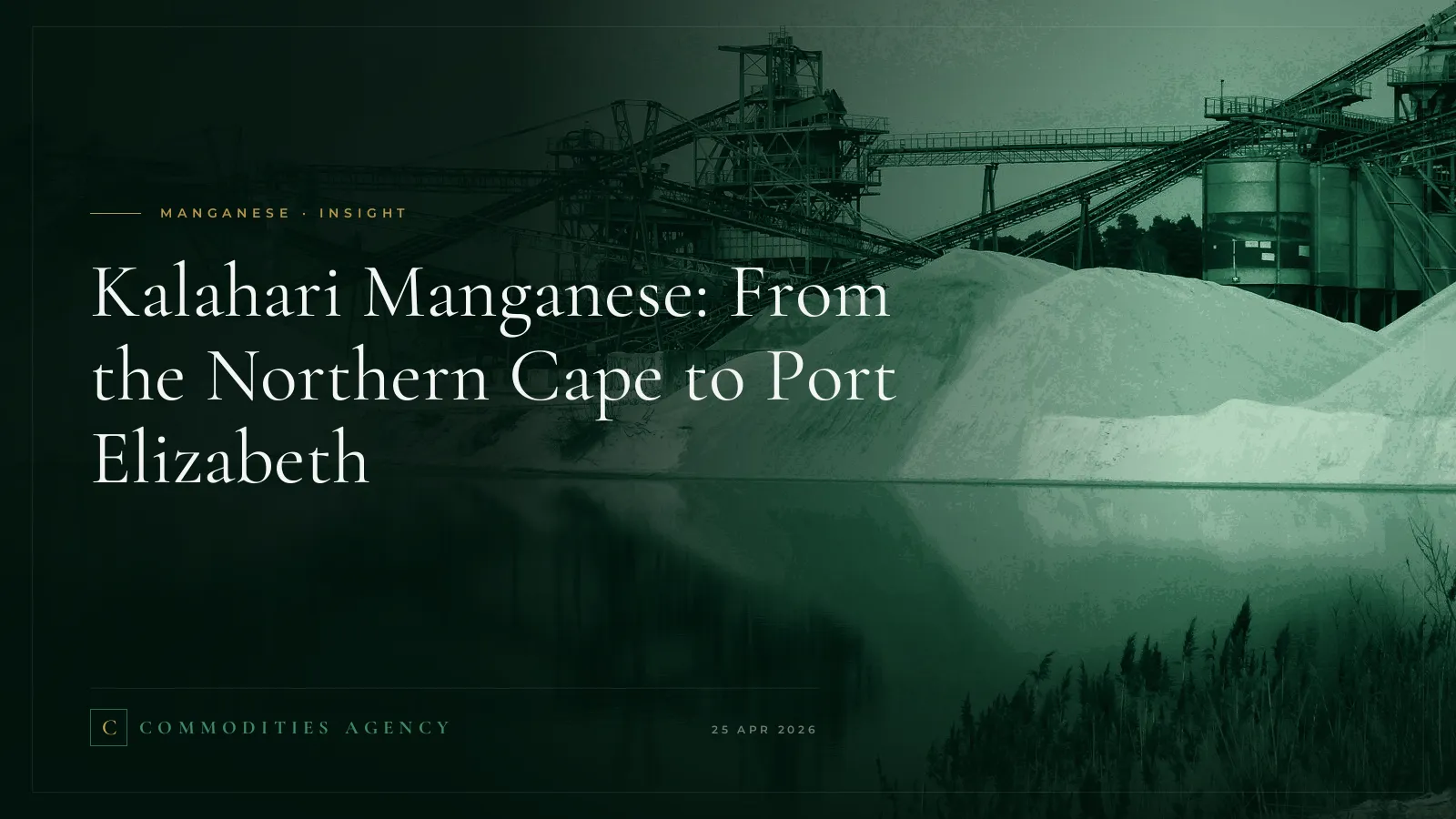
If chrome is South Africa's quiet dominance, manganese is its overwhelming one. The Kalahari Manganese Field in the Northern Cape contains by most estimates around 80% of the world's known land-based manganese resources, a single district around the towns of Hotazel and Kuruman that steels the world's rebar, one furnace charge at a time.
Grades and what they mean
Manganese ore is sold on contained manganese percentage. Kalahari material typically ranges from 36–38% Mn (the volume standard) up to 44%+ for premium lumpy ore. Alongside Mn content, buyers watch iron content, phosphorus, and the lumpy-to-fines ratio, fines trade at a discount but suit sinter plants; lumpy ore feeds directly into ferroalloy furnaces.
The Port Elizabeth route
Manganese has historically moved on the dedicated rail corridor from the Northern Cape to Port Elizabeth (Gqeberha), where the bulk terminal loads ocean vessels. The corridor is the artery of the trade: rail allocation, not mine output, is usually the binding constraint on export volumes, which is why access to confirmed rail slots separates genuine offers from optimistic ones. Ngqura's newer deep-water facilities increasingly supplement the route, but “FOB Port Elizabeth” remains the standard contract basis.
Why 30,000 tonnes
Like coal at Richards Bay, manganese export economics are built around bulk vessel loadings, Handymax and Panamax stems. Port and rail costs make small parcels uneconomic, so credible offers begin around 30,000 MT. Smaller buyers typically participate through aggregated stems or traders holding allocation.
What it means for a manganese seller
In manganese, the value sits in the leg between the mine gate and the vessel. A producer with good ore and no rail allocation or port services arrangement holds mine gate tonnes, and mine gate tonnes trade at a substantial discount to an FOB cargo. The practical options are to secure allocation directly, to sell to a party that already holds it, or to sell at the mine gate and let the buyer or an intermediary carry the logistics. Each is legitimate, but the offer must say which it is, because buyers price the risk of that leg very differently.
Buyers also look past the headline manganese grade. Iron, phosphorus and silica limits, the split between lumpy and fines, and sizing all feed into price, and index linked pricing against a published Port Elizabeth assessment is used on many export contracts. A certificate covering the full specification, issued by a named independent laboratory, saves a round of questions.
We place manganese ore with ferroalloy and processing buyers in Asia and the Gulf. If you hold Kalahari material, tell us the grade, the tonnage and where it sits. The mechanics of rail and port are covered in how a trade is structured.
Manganese Ore
We place manganese ore with named international buyers. Tell us the grade, roughly how much you hold and where it sits, and you will know inside a trading day whether we have a buyer.