Zimbabwe's Great Dyke: Africa's High-Grade Chrome Frontier
A 550 kilometre seam holds the world's second largest chromite reserve and its highest grades. How Zimbabwean 46 to 48% concentrate reaches world markets.
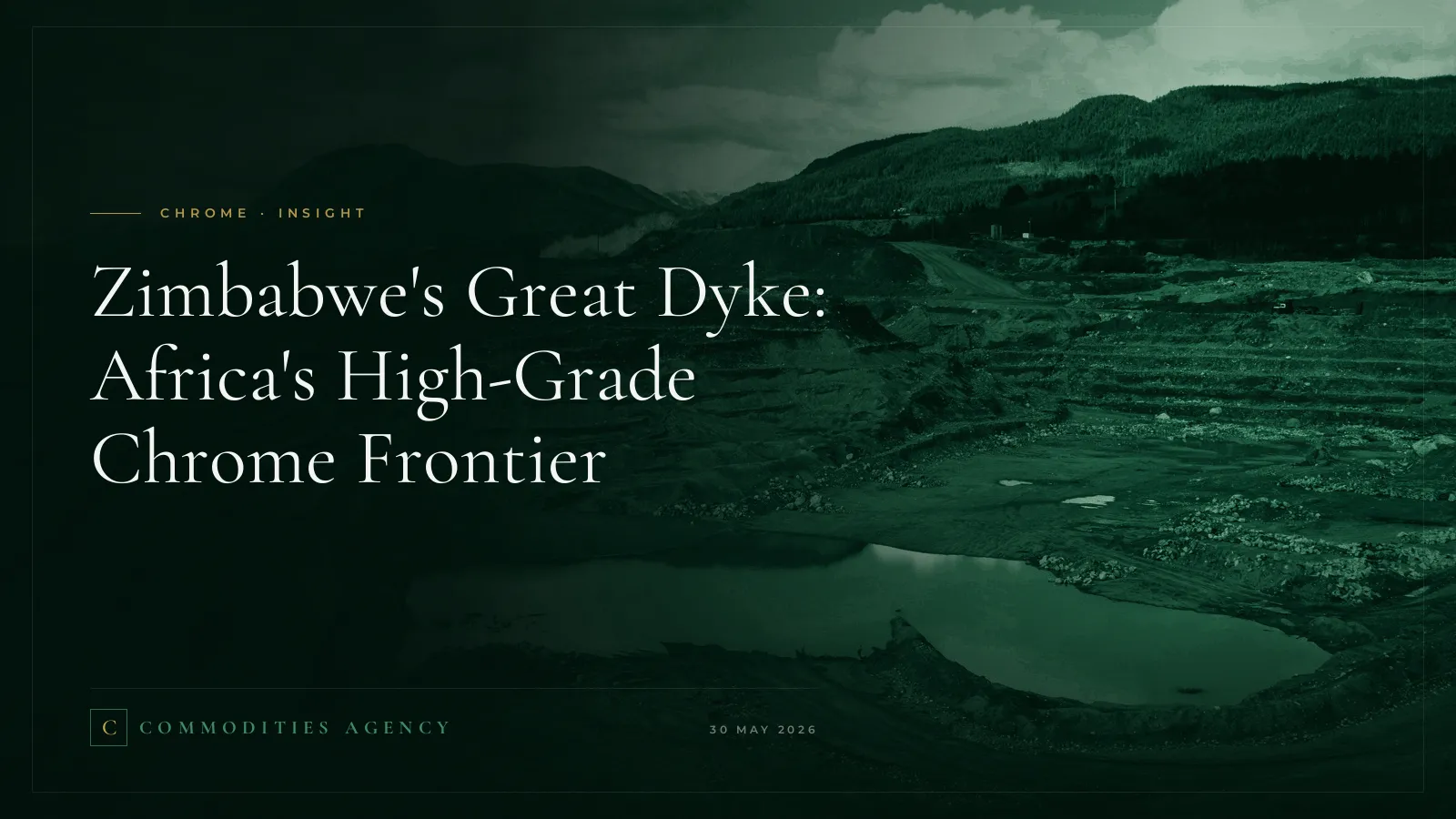
Running like a spine down the centre of Zimbabwe, the Great Dyke is one of the most remarkable ore bodies on the planet: 550 kilometres long, rarely more than 11 kilometres wide, and holding the world's second-largest chromite endowment after South Africa's Bushveld. What it lacks in tonnage relative to its neighbour, it makes up for in grade.
Why the grades are higher
Great Dyke chromite seams routinely yield concentrates at 46% to 48%+ Cr₂O₃ with chrome-to-iron ratios between 2:1 and 2.8:1, figures the Bushveld's main seams cannot match. For ferrochrome producers, that translates directly into higher-grade alloy, lower power consumption and reduced slag handling. Zimbabwean material is consequently prized as a blending feed and for premium alloy production.
The logistics reality
Zimbabwe is landlocked, so every export tonne must transit a neighbouring corridor:
- Beira, Mozambique, the shortest route from the northern and central Dyke, via road or the Machipanda rail line.
- Maputo, Mozambique, a longer haul but a deeper, better-equipped port with established minerals handling.
- Durban, South Africa, the premium option for containerised or break-bulk parcels, via the Beitbridge border.
Corridor choice is a live commercial decision on every contract, border congestion, fuel costs and seasonal rail performance move the landed cost materially. This is where an experienced facilitating desk earns its keep.
Compliance matters
Zimbabwean chrome exports operate under evolving fiscal and licensing rules, including export permits and beneficiation policy. Buyers should insist on sellers with current export licences and clean documentation trails. Every Zimbabwean offer we facilitate carries verified licensing and independent assay before funds move.
For Zimbabwean producers selling into the region
A Zimbabwean producer has two broad markets. The first is export: material consolidated and moved through Beira, Maputo or Durban onto bulk or container vessels for smelters overseas. The second is regional: concentrate sold delivered into South Africa, where high grade feed is valued by smelters blending up a lower grade stockpile. Each route has a different cost stack and a different paper trail, and an offer should say clearly which one it is built on.
Whichever route you choose, the commercial conversation goes faster with three things ready: a current independent assay showing Cr₂O₃ and the chrome to iron ratio, which is what sets Great Dyke material apart (see chrome concentrate grades explained), your export permit position, and an honest weekly tonnage. Buyers will usually start with a trial parcel to prove grade and logistics before committing to a running contract, and settlement on a dry metric tonne basis, with moisture determined on testing, avoids most arguments about what was actually delivered.
We place Great Dyke chrome concentrate with buyers who value its grade. If you hold 46% or 48% material, tell us what you have and where it sits.
Chrome Concentrate
We place chrome concentrate with named international buyers. Tell us the grade, roughly how much you hold and where it sits, and you will know inside a trading day whether we have a buyer.